DI deionization water systems
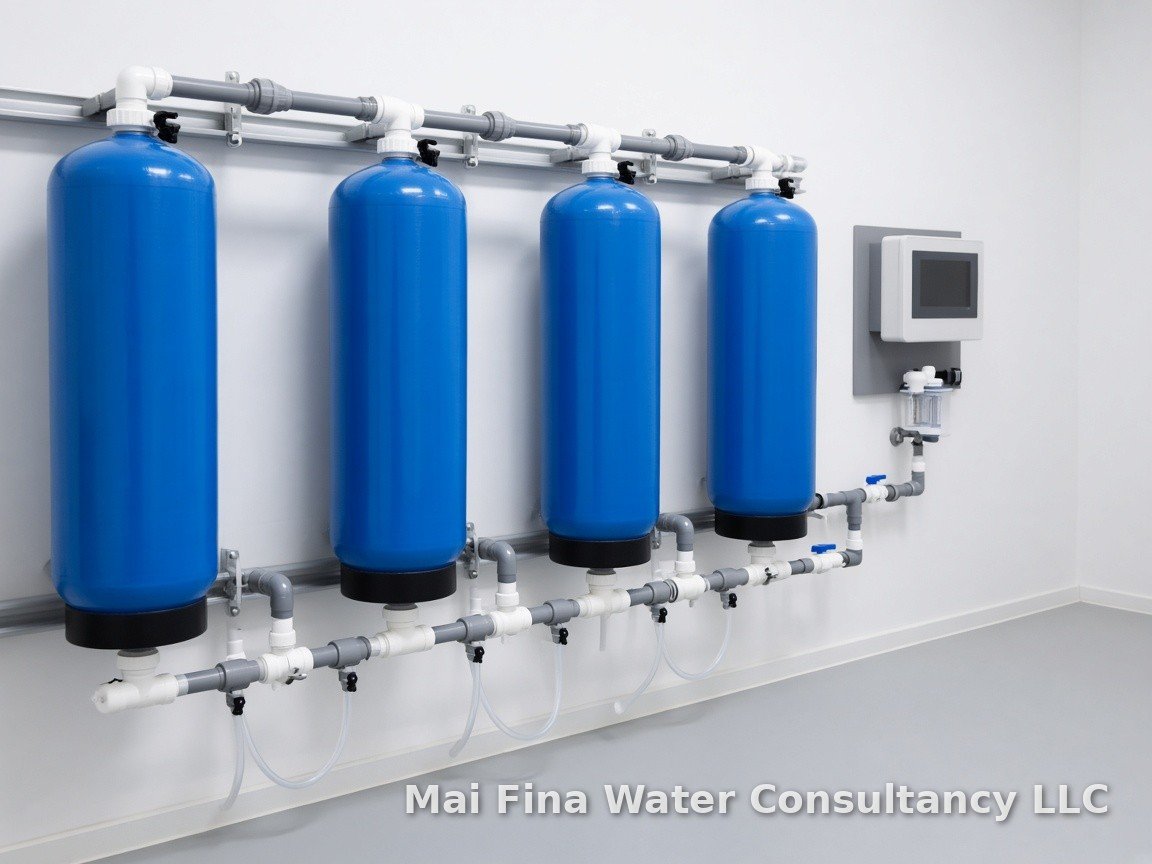
DI (deionization) water systems from Mai Fina: cation/anion and mixed-bed resin units, regenerable on site or as service exchange (SDI) cylinders, with conductivity monitoring, for laboratories, batteries, electronics, autoclaves, boiler make-up and cosmetics across the UAE.
How deionization works
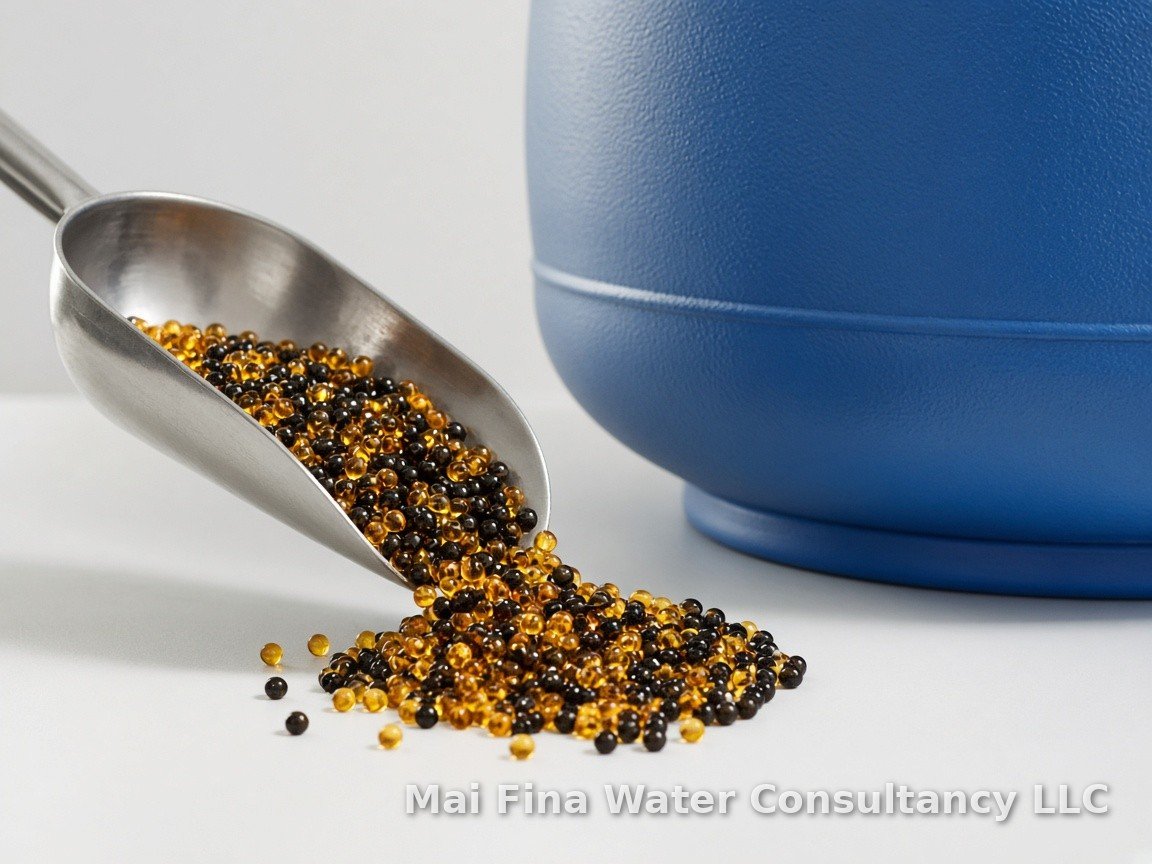
Ion-exchange resins swap dissolved salts for hydrogen and hydroxide ions: the cation resin removes calcium, magnesium, sodium and other positive ions, the anion resin removes chloride, sulphate, nitrate, silica and other negative ions, and the two combine to form pure water.
Configurations
Two-bed cation/anion units for bulk demineralisation, mixed-bed units for polishing to high resistivity, or RO followed by mixed-bed DI to cut resin use on high-TDS feed water.
Regenerable or service exchange (SDI)
Regenerable units are regenerated on site with acid and caustic. Service exchange (SDI) cylinders are swapped when exhausted and regenerated off site, so no chemicals are handled at your premises.
Conductivity monitoring
Inline conductivity / resistivity meter on the outlet with an exhaustion alarm, so cylinders are changed or beds regenerated before quality drops.
Applications
Laboratories, battery topping and manufacturing, electronics rinsing, autoclaves and sterilisers, boiler make-up and cosmetics production.
Design data we need
Feed water analysis, required outlet conductivity or resistivity, daily volume and peak flow, and whether you prefer on-site regeneration or service exchange.
Included / excluded
Included: sizing, resin vessels or SDI cylinders, conductivity monitor, installation and commissioning, with an AMC or exchange schedule. Excluded unless written: civil works, feed and drain connections beyond the skid, chemicals for on-site regeneration.
Specifications
| Parameter | Typical |
|---|---|
| Capacity / flow | Typical 0.1 to 20 m³/h |
| Configuration | Two-bed (cation / anion) or mixed-bed |
| Product water | Typical 1 to 18 MΩ·cm resistivity depending on configuration |
| Operating pressure | Typical 2 to 6 bar |
| Regeneration | Off-site exchange or on-site acid / caustic |
| Materials | FRP vessels, uPVC / SS316 piping |
| Power | 220-240V / 1ph / 50Hz (controls) |
| Footprint | Typical 0.5 x 0.5 m to 3 x 1.5 m |
| Controls / instrumentation | Resistivity / conductivity meter, flow meter, pressure gauges |
Typical values. Final specifications depend on feed water analysis and site requirements.
Talk to us
Send your water analysis and duty to info@maifina.com or WhatsApp / call +971 55 521 7294.