Mai Fina designs containerized RO and SWRO, softeners and DI/demin from 400 GPD to 100,000 GPD, hotel and laundry MBR recycle, car-wash reuse, UHPRO and EDI.
Not a bottled-water shop. Mai Fina is a process house: feed analysis, recovery, membrane selection, high-pressure pumping, CIP, controls, delivery, installation and commissioning — written into quotations, delivery notes and service reports.
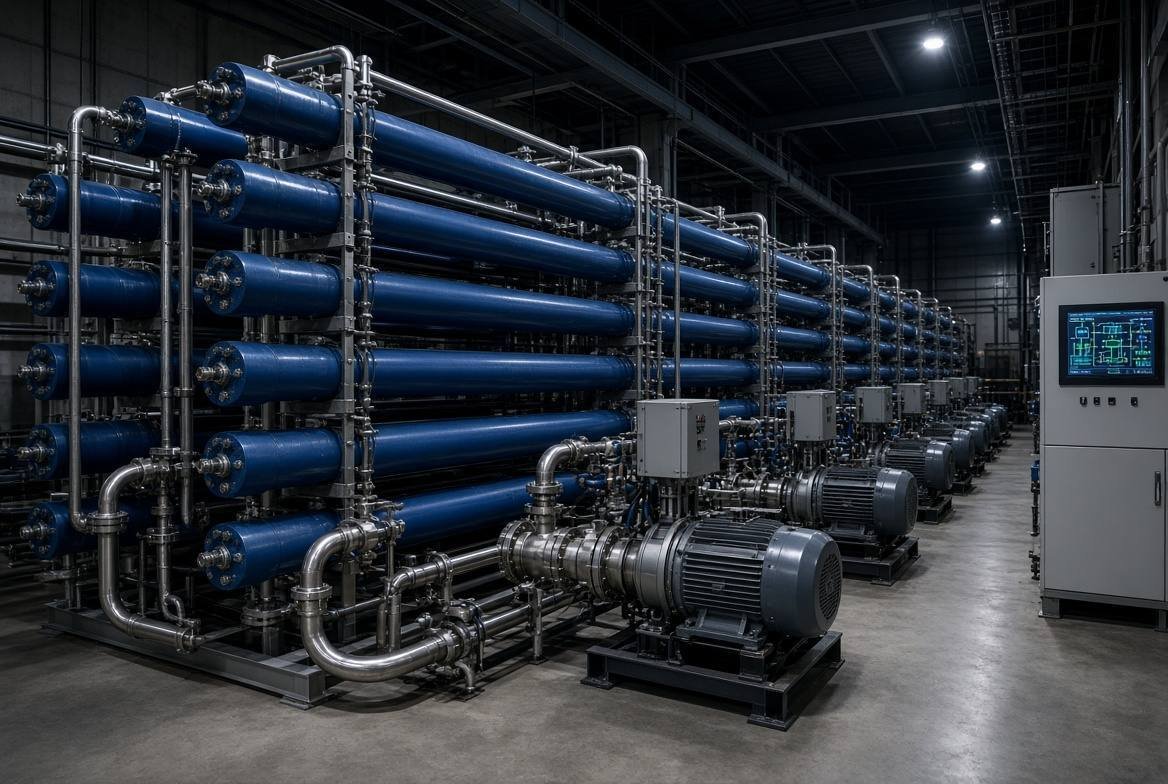
Containerized 20,000–100,000 GPD trains for oilfield camps, utilities and factories. Feed analysis first, then array: 8040 BW or SW, 5-element 600 psi vessels, specified HP pump and feed pump, CIP, antiscalant / acid dosing, cluster pre-filter, contactor or PLC panel with dry-run and empty-tank stop. Delivered in 20 ft or 40 ft HC with lighting and cable trays. Installation and commissioning written on the delivery note.
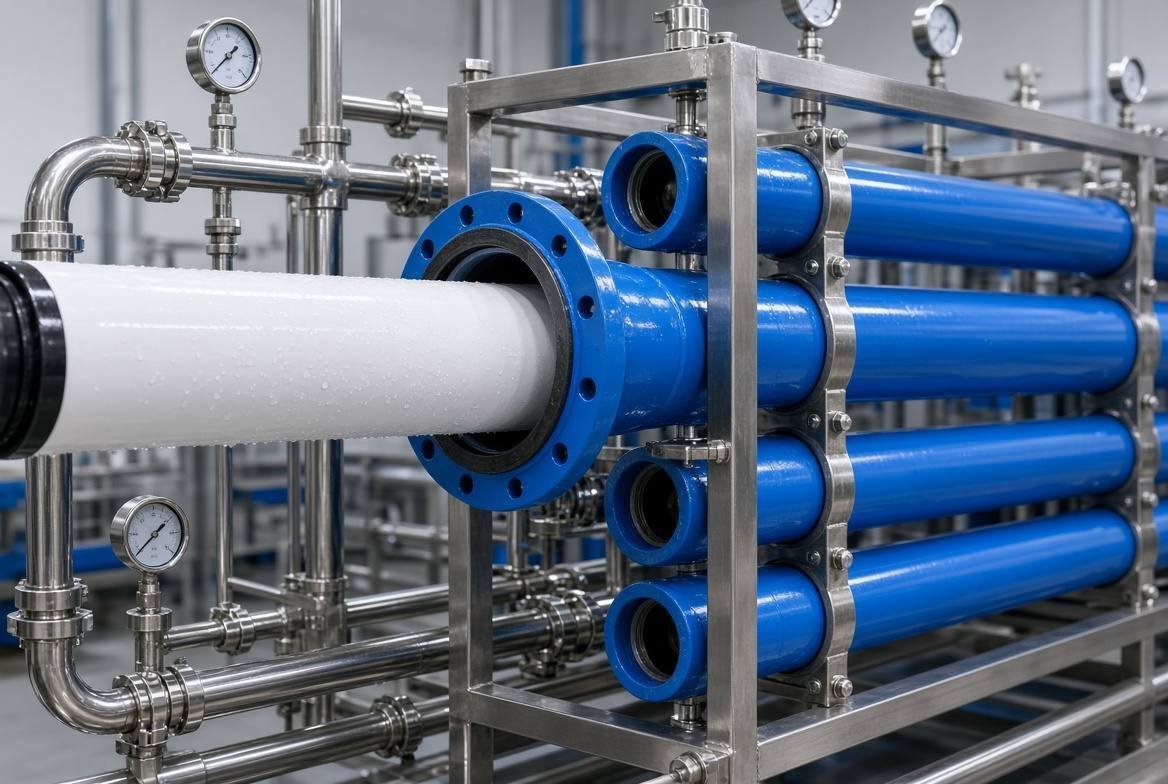
When borewell TDS leaves the brackish range (ASAB-class 12,300 mg/L and above), the plant is built on full seawater SW 8040 elements — Filmtec / Toray / Hydranautics class — typically 20 elements in 4 × 5-element 600 psi FRP vessels. Higher rejection, safer flux, CIP chemistry sized for SW fouling. Not a BW skid with SW stickers.
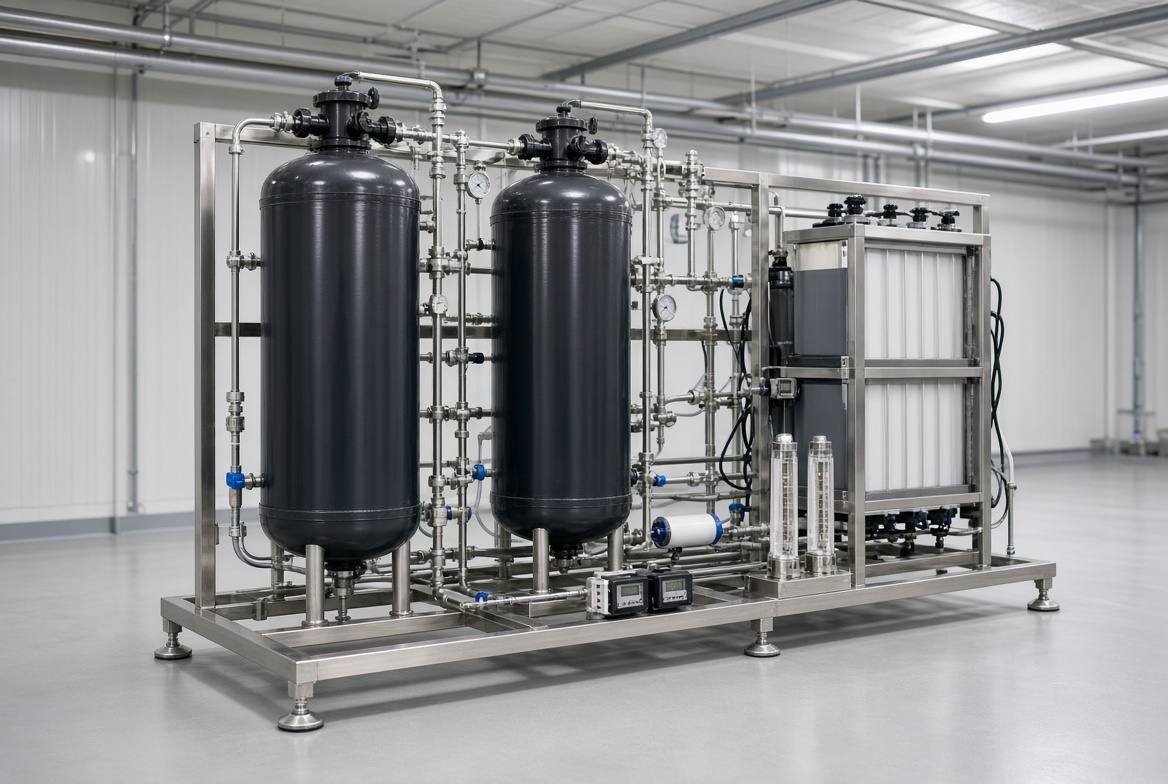
RO permeate polished to low µS for boilers, plating and process. Mixed-bed DI cartridges or vessels on small duties; continuous EDI + mixed-bed polish on larger trains. Online conductivity with reject-to-drain or recirculation. Range from 400 GPD laboratory skids to 100,000 GPD DE-M halls.
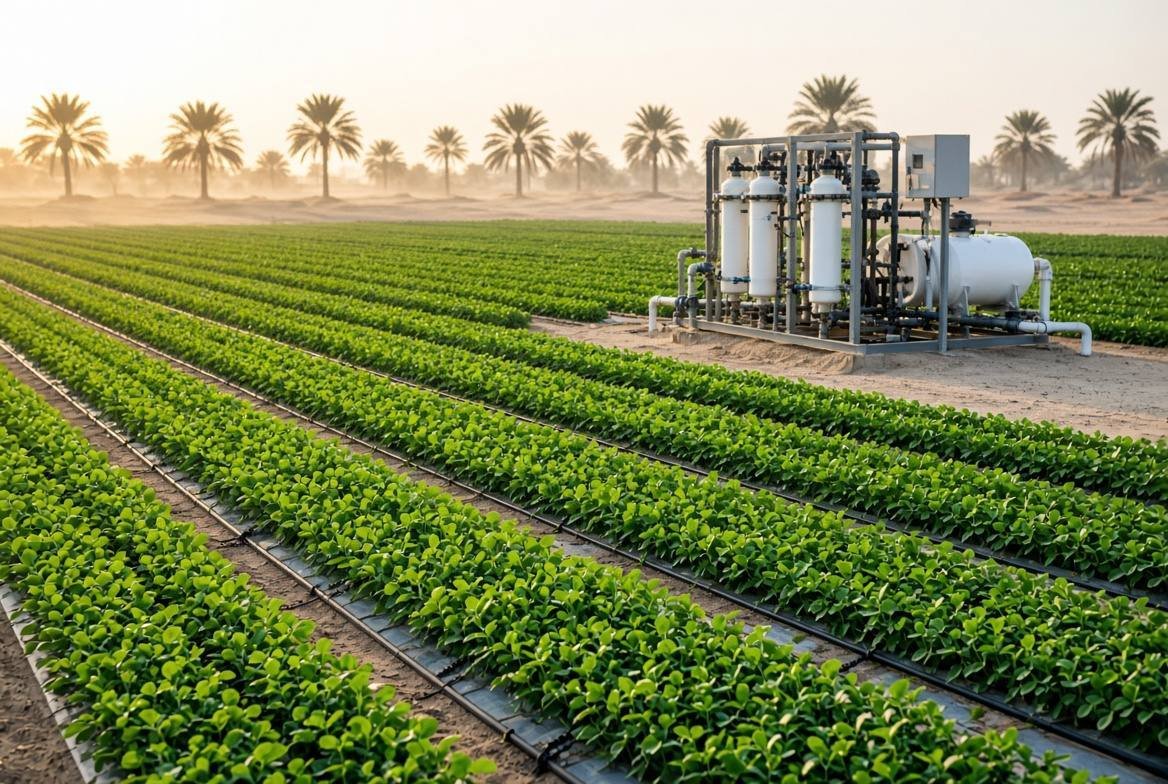
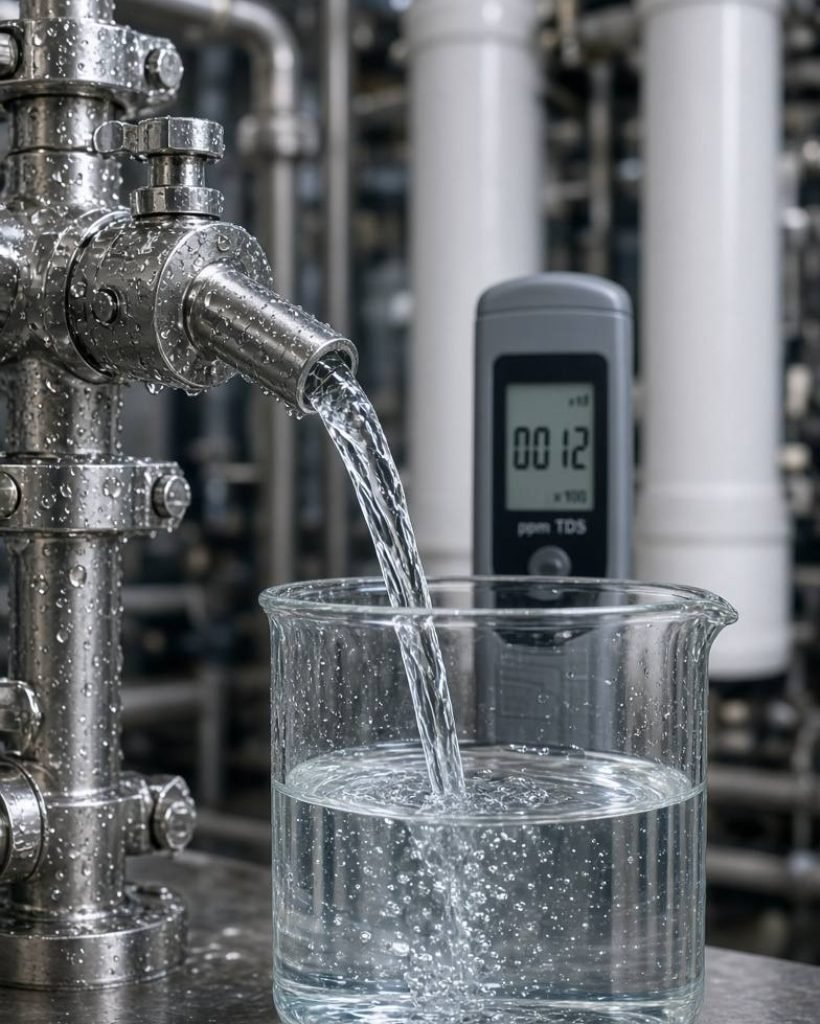
Controlled product TDS for hydroponics, date farms and livestock so salinity does not burn root zone or scale drippers. New skids or restoration of existing farms (membrane change-out, vessel work, TDS meter, production recovery). Design on the actual well analysis, not a municipal assumption.
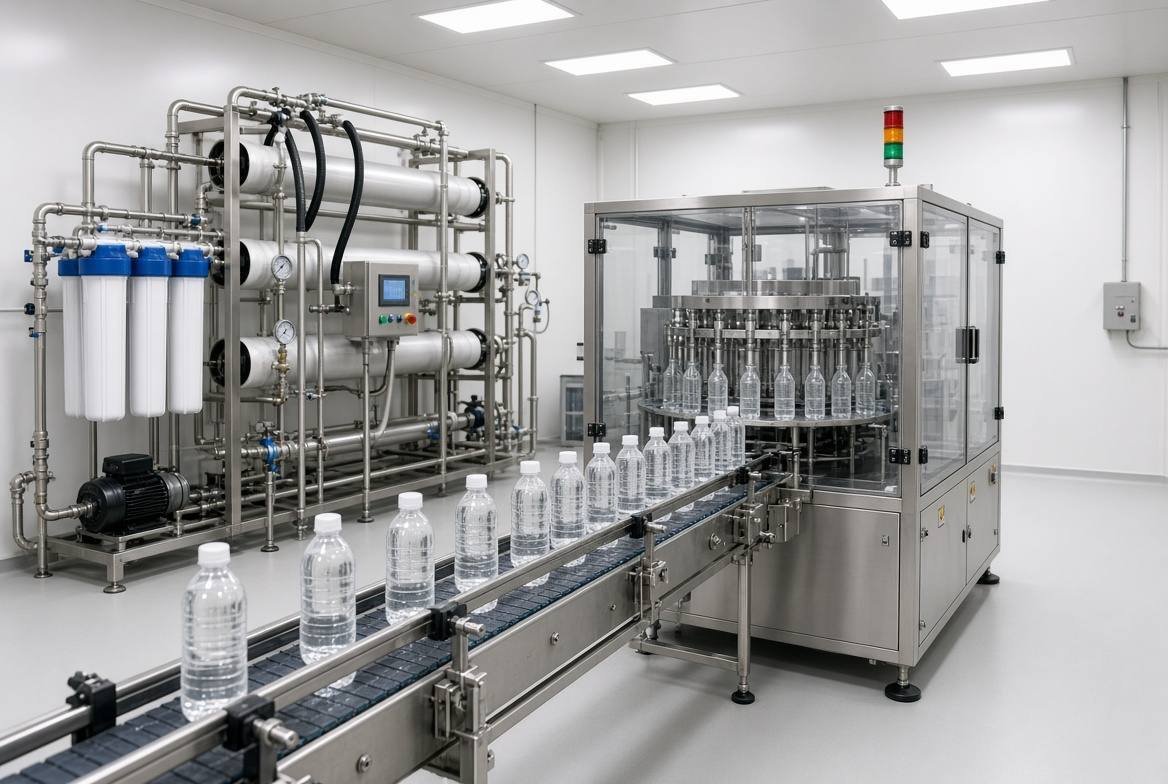
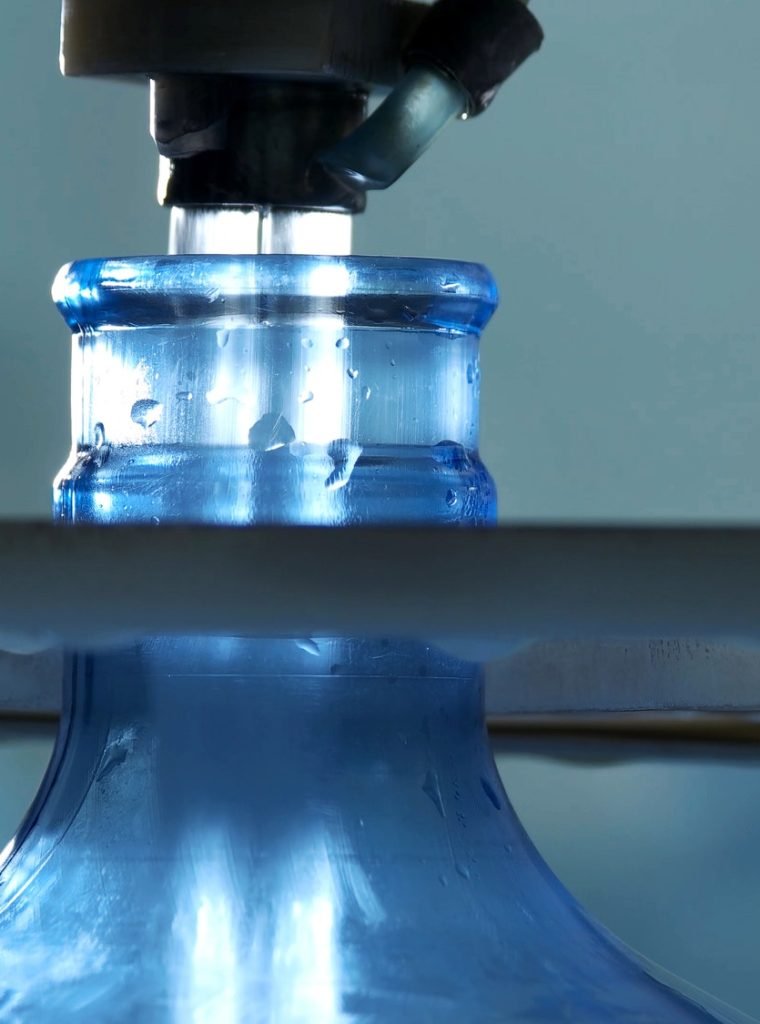
Factory RO (typically 3 m³/h / ~20,000 GPD class) with sand/carbon, antiscalant, UV and mineral dosing where specified — plus filling-line packages (rinse–fill–cap, cap elevator, conveyors) scoped line-by-line so the client sees what is in Mai Fina supply and what stays on their floor.
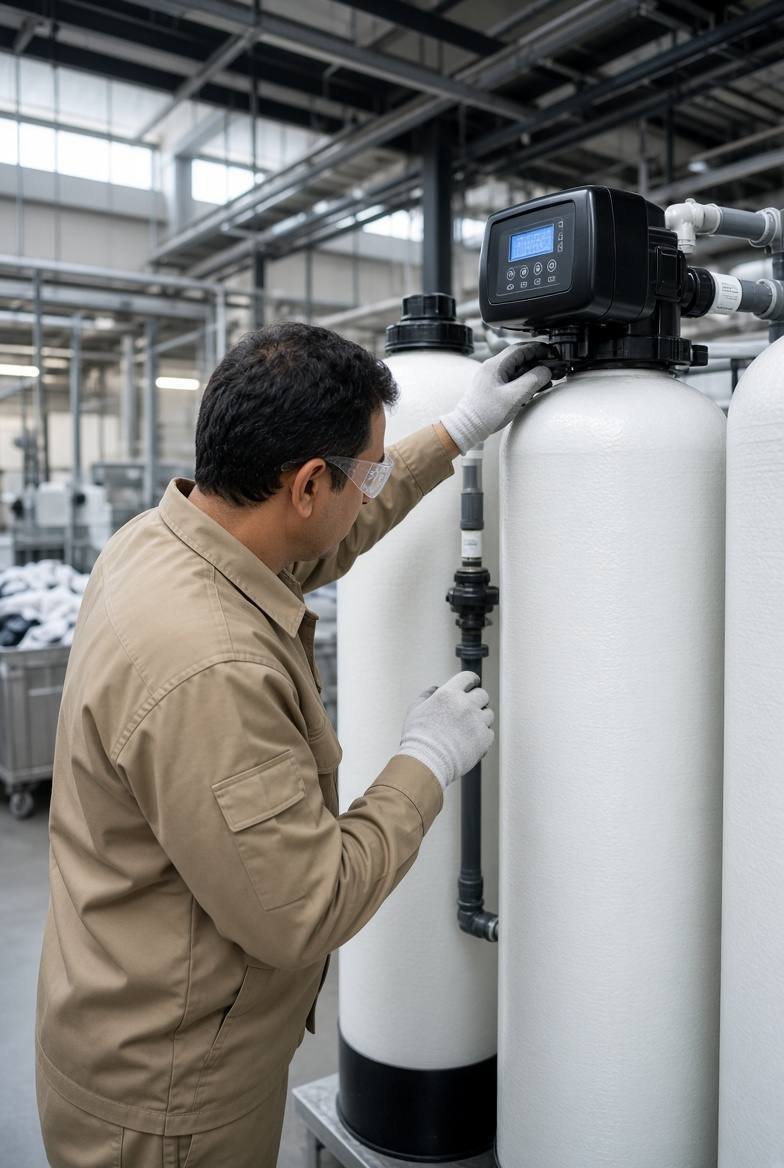
Clack WSITC-S / FRP duplex, jumbo housing, brine tank. AMC covers scheduled visits, regen tests, salt top-up and cartridge change where contracted. Resin and carbon media replacement quoted only if the bed is exhausted. Emergency visit inside 24 hours; 24/7 phone support.
Two trains on one site: softener on city feed so linen comes out bright and free of scale; MBR recycle on wash + rinse drains so ~70% returns as dedicated final-rinse water. Result is better wash quality, less detergent carry-over, lower DEWA/ADDC and tanker bills.
Screening → equalisation → biological tank → submerged MBR cassette → disinfection → optional RO polish. Design recovery about 70% of grey / sewer flow as rinse-grade water. Sludge handling and overflow to existing drain remain in the client civil package unless ordered.
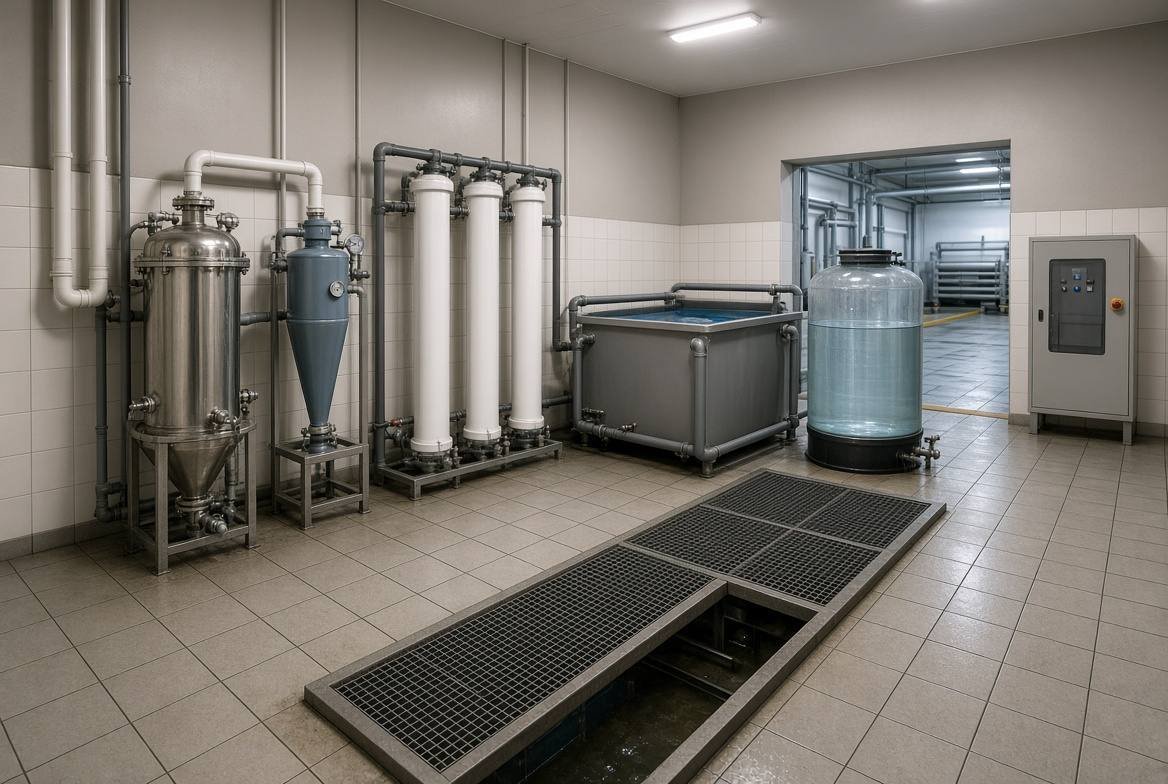
Not a container in the yard. A tiled equipment room next to the wash hall: floor grate and collection sump, oil-water separator, grit / cyclone, UF or MBR housings, clear product tank, panel. Recycled water feeds the rinse arches; fresh makeup only for a spot-free last pass if specified.
Feed TDS, hardness, silica, temperature and recovery decide the array. We write that into the BOQ: membranes, vessels, HP pump duty, dosing, CIP, panel protection, container fit-out.
CIP, antiscalant / acid dosing, cluster pre-filtration
Hotels, central laundries and car-wash stations throw away water that can be recovered. Mai Fina specifies an MBR train on grey / laundry wastewater: screening, biological treatment, membrane separation, optional RO polish. Product is used on the final rinse so wash quality rises and freshwater demand falls.
Guest bathrooms, kitchen pre-wash and central laundry share one grey line. Incoming city water is softened for guest taps and linen. Drain water is equalised, screened and treated on an MBR skid in the basement plant room. Product is stored and pumped only to final rinse and selected flushing — not to potable taps unless a separate RO + UV train is ordered.
Wash and first-rinse drains carry lint, surfactant and colour. Lint screen and balance tank protect the cassette. MBR produces a clear stream; chlorine or UV follows. That stream is locked to the final rinse so residual soil and hardness do not redeposit. Target recovery ~70%. Wash quality improves because the last water that touches the linen is the cleanest, not the cheapest dump from the drain.
Wash water falls to grated channels, then a sump in a dedicated plant room (not an ISO container). Oil and grit drop out; cyclone and bag or disc filter take fines; UF / MBR polish colour and solids; a clear tank feeds the recycle pump to the arches. Makeup water and optional RO only on the last spot-free bar. Designed for UAE heat, sand and high daily bay counts.
Design recovery: approximately 70% of sewer / grey flow returned as rinse-grade water
MBR cassette + optional RO polish where TDS or colour must drop further
Improves washing quality on linen and vehicles by feeding a dedicated clean rinse
Cuts tanker discharge and DEWA / ADDC consumption on hotel and laundry accounts
Water softeners for hotels, laundries, villas and boilers. De-ionisation / demineralisation (DI · DE-M) from laboratory 400 GPD skids to industrial mixed-bed and EDI trains up to 100,000 GPD. Same engineering desk as the RO plants.
Sized on hardness (mg/L as CaCO₃) and peak m³/h, not on “number of bathrooms”. Twin FRP with Clack heads so one vessel is in service while the other regenerates. Jumbo sediment/carbon upstream. Salt tank cleaned and charged on AMC. Protects heaters, irons, membranes and linen.
Industrial demineralisation: cation exchanger, anion exchanger, mixed-bed polish — or RO first pass plus EDI where continuous low µS is required. Regenerant handling, conductivity interlock and product divert. Skid or hall installation. Boiler makeup, food process, oilfield utilities.